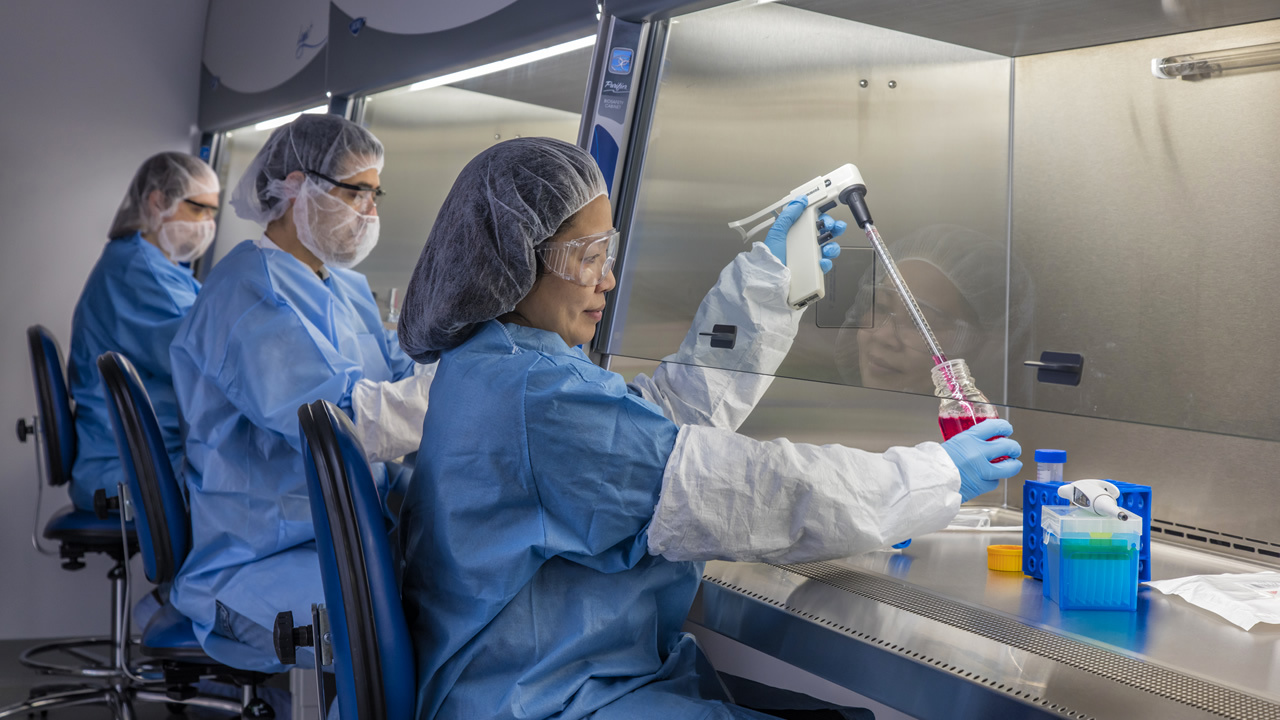
Upstream processing is the initial phase of the bioprocess from cell line development and cultivation to culture expansion of the cells through bioproduct harvesting. In this course, students will learn the fundamentals of both microbial and mammalian cell culture including processing steps and process equipment. They will have hands-on lab applications including running a fermenter, analytical test equipment, and performing a mammalian cell passage.
- Bioprocess Technicians
- Bioprocess Engineers
- Manufacturing Associates
- Fermentation Technicians
- Fermentation Lab Analysts
- Introduction to upstream fermentation systems
- Fermentation Lab
- Upstream Facilities, Equipment, Control
- Use of sanitary fittings
- Fermentation Lab
- Cell Culture
- Working with Mammalian cells
- Analyte Testing
- Single Use Technology and tube welder
- Perform a passage
- Aseptic Connection Demonstration
Attendees who have completed this course should be able to:
- Explain the goals of upstream and the principles behind aerobic fermentation including nutrients required, growth and fermenter design.
- Explain rules for proper sterilization.
- Describe process steps involved in a typical fermentation operation.
- Identify the components of a small-scale fermenter and describe probe calibrations and controls. Witness inoculation and growth. Learn how to operate a UV/VIS spectrophotometer. Sample, record and graph results for the fermenter run.
- Explain types of contamination and how to control.
- Describe key upstream equipment and components. Explain key sensors and the basics behind system control.
- Demonstrate proper use of sanitary fittings and gasket selection. Operate a diaphragm valve.
- Tour the BTEC upstream facility and see demonstration on the DCS operation.
- Explain the unique characteristics of mammalian cell culture and how to properly monitor. Identify key cell types.
- Describe process steps involved in a typical cell culture operation.
Delivered in-person in a classroom or lab setting.

Upstream processing is the initial phase of the bioprocess from cell line development and cultivation to culture expansion of the cells through bioproduct harvesting. In this course, students will learn the fundamentals of both microbial and mammalian cell culture including processing steps and process equipment. They will have hands-on lab applications including running a fermenter, analytical test equipment, and performing a mammalian cell passage.
- Bioprocess Technicians
- Bioprocess Engineers
- Manufacturing Associates
- Fermentation Technicians
- Fermentation Lab Analysts
- Introduction to upstream fermentation systems
- Fermentation Lab
- Upstream Facilities, Equipment, Control
- Use of sanitary fittings
- Fermentation Lab
- Cell Culture
- Working with Mammalian cells
- Analyte Testing
- Single Use Technology and tube welder
- Perform a passage
- Aseptic Connection Demonstration
Attendees who have completed this course should be able to:
- Explain the goals of upstream and the principles behind aerobic fermentation including nutrients required, growth and fermenter design.
- Explain rules for proper sterilization.
- Describe process steps involved in a typical fermentation operation.
- Identify the components of a small-scale fermenter and describe probe calibrations and controls. Witness inoculation and growth. Learn how to operate a UV/VIS spectrophotometer. Sample, record and graph results for the fermenter run.
- Explain types of contamination and how to control.
- Describe key upstream equipment and components. Explain key sensors and the basics behind system control.
- Demonstrate proper use of sanitary fittings and gasket selection. Operate a diaphragm valve.
- Tour the BTEC upstream facility and see demonstration on the DCS operation.
- Explain the unique characteristics of mammalian cell culture and how to properly monitor. Identify key cell types.
- Describe process steps involved in a typical cell culture operation.
Delivered in-person in a classroom or lab setting.